Eeyun Purkins: Between Roots, Rhythm & Possibility
Over the past few years, Eeyun Purkins has quietly become one of the most exciting figures within contemporary UK roots reggae. Operating from Waggle Dance Studios on the outskirts of Bristol, he has built an entire ecosystem around his love for Jamaican music: producer, songwriter, multi-instrumentalist, studio owner and founder of Waggle Dance Records. But while his work is deeply rooted in the sounds of 1960s, 1970s and early 1980s Jamaica, his music never feels trapped in nostalgia. Instead, Eeyun approaches roots reggae as a living tradition – one that can absorb new influences while remaining respectful of its origins. With the launch of HerbNest and the forthcoming album ‘Fruits Of The Diaspora’ alongside Mo Kolours & The Co-Operators, Irieites.de spoke to him about tradition, politics, collaboration, friendship, dub and why making music remains, above all else, an act of human connection.
Looking back on the past few years of Waggle Dance Records and your productions, was there a moment in the studio – a pause or a sound – when you thought: this is exactly why I do this?
To be honest, I have moments like that almost every day. I feel very lucky that I get to do this, and that people are interested in what we’re doing. When I started Waggle Dance, it was just me in my bedroom in Manchester, slowly gathering some equipment, really just doing it for fun. I’d been playing in bands for years, touring a lot, and things were beginning to slow down – I just wanted a project that expressed my love for a certain period of music. I didn’t expect much from it.
These days I still spend a lot of time here on my own, and of course there are frustrations – figuring out arrangements, finding the direction of a track. But then there are these small moments of clarity. I often find myself just stepping back, moving to the rhythm, seeing if it really grooves. If you can dance to it, that’s usually a good sign. And in those moments, I just think: yeah, I really love this.
And then there’s something else – when someone comes in and adds their voice to what you’ve been building. I had a singer here the other day, and hearing her bring her own ideas and melodies to a rhythm track I’d made – that’s a really special moment. You can take a track a long way on your own, but sometimes it only truly comes alive when someone else steps into it.
Waggle Dance Records feels less like a conventional label and more like a place where music is allowed to happen. What needs to be right in a room, technically, humanly, emotionally for music to truly open up?
Okay, that’s a good question. I might come back to parts of it later, but one thing I think about a lot: people tend to focus on equipment-gear, all that – which is important. The way you record shapes the workflow, and that matters to me.
But as a producer – especially when you’re also engineering – you need more than technical knowledge. You need people skills. You have to make people feel comfortable, feel like they belong, like their ideas are valid and worth expressing. You can have the best mic in the world, but if someone doesn’t feel at ease, you won’t get the best out of them. I know there are producers who work with tension or nervous energy, but I try to do the opposite—create a space where stepping into the studio feels like entering a world where you can really express yourself.
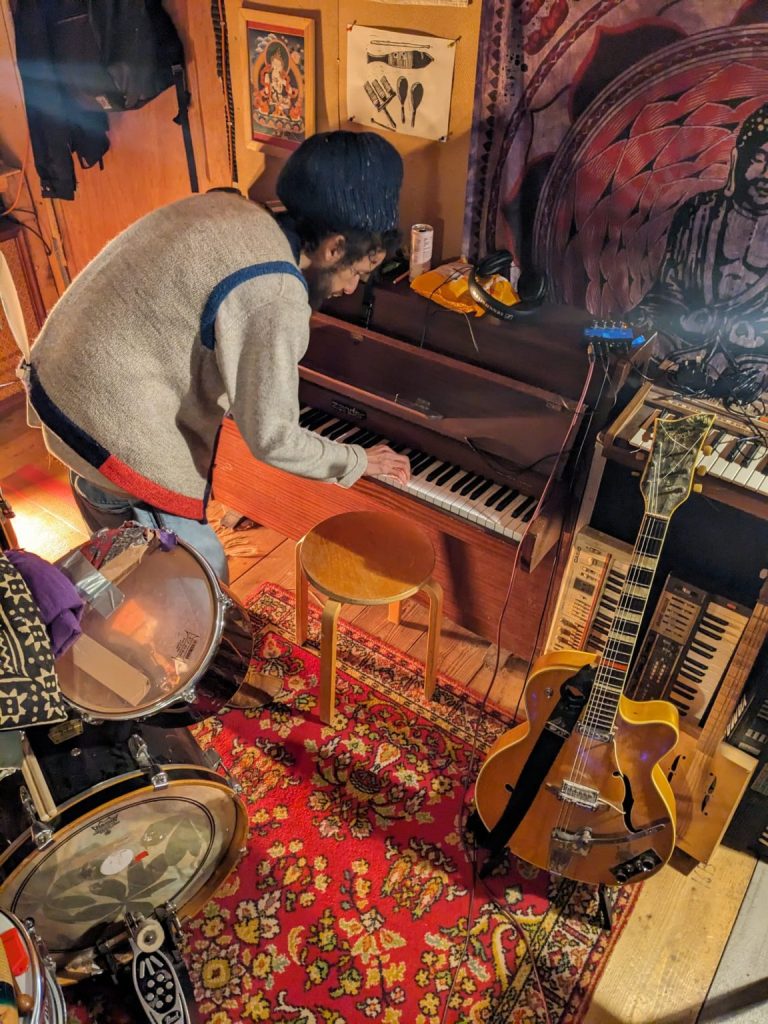
On the technical side, my workflow is quite physical. I use instruments rather than building everything in a computer. If I need a piano, there’s a piano. If I need an organ, there’s a Hammond. I don’t have endless options – and that limitation is actually really helpful. It keeps things moving, stops us from overthinking, and lets decisions happen quickly. For me, that’s a core principle: limitation as a creative tool.
There is often talk about whether reggae should be preserved or reimagined. How do you deal with that tension in practice, in the moment of recording or making decisions?
There are so many different styles of reggae today, but I’m mostly drawn to the sounds from the 60s through to the early 80s – that’s really the window I love most, with a few exceptions. That music is in my bones, so I do feel it should be preserved. Its history and tradition matter, and it’s had such a huge impact on music worldwide.
In practice though, I don’t overthink that tension. I’m just doing my own thing. I work with live instruments rather than building everything in the computer – partly because I like the workflow, and partly because limitation feels creatively useful to me. But that’s just what works for me, not a rule for anyone else.
At the same time, I’m bringing in other influences – things happening around me, films, a more cinematic way of thinking about sound. So for me it’s really about balance: paying respect to the music I love, appreciating it rather than appropriating it, and ultimately doing what feels honest and true.
 Your productions feel warm but never loose or unfocused. How do decisions happen in the studio? Is there a moment where you consciously let go?
Thank you, that’s very kind. I’m drawn to a fairly round sound. I don’t like overly bright, shrill tops. A lot of that warmth probably comes from the way I work and the equipment I use – older gear, valves, preamps – things that naturally soften and shape the sound. I especially like a bass tone that’s warm and a bit rolled off.
In terms of process, I usually start with a chord progression, sketch something out, then record the drums – and then I often delete everything and rebuild the track from the drums up. The bass is really central for me. I like it to have space. Someone once said to me, “want more space than bass,” and that’s always stayed with me. Space can make a bassline feel heavier.
My rhythms tend to be a bit slower, moodier. That gives more room – for the groove, but also for percussion, which is a big part of how I build atmosphere and emphasise rhythm. If things are too busy, you lose that space.
I try not to put everything into the bassline. It’s a foundation, but I want other elements to have their place around it. And generally, I make decisions quite quickly. I don’t like keeping endless options – like stacking loads of vocal takes and deciding later. I prefer choosing in the moment and moving forward.
Sometimes that means keeping something slightly imperfect. But I like that. As they used to say in Jamaica: every spoil is a style. It’s about choosing the right mistakes as much as the right decisions.
Dub plays a central role in your work. When do you feel a song is ready for a dub – and what are you hoping can change or reveal itself in that second step?
That’s an interesting question. For me, it usually starts with a vocal track that I mix live on the desk. I record that mix straight into the computer as a stereo take – almost like working with tape. Once it’s done, I can’t really go back and tweak things without doing the whole mix again in real time.
When I feel like I’ve arrived at a final vocal mix, that’s usually when I move into the dub. But the dub also becomes a way of checking the mix. As I start stripping elements away, I often hear things more clearly – what’s too loud, what’s sitting wrong – so sometimes I’ll run a few dubs that never get used, just to understand the balance better.
In terms of the dub itself, I try not to overwork it. I’m not looking for constant effects or too many tricks. For me, dub is about revealing the rhythm. If the rhythm is strong, it will carry the dub without needing much else. And those moments where everything drops back to just drums, bass and percussion – that’s really where it comes alive.
 You’ve worked with many different voices and personalities. Was there a session or encounter that particularly surprised or moved you – musically or on a human level?
For me, it’s really important to have a human connection with the people I work with. The music isn’t just business – it’s something that has to be felt as well as heard. I’ve been very lucky to have friends with great talent around me who’ve become deeply involved in the project over the years. My collaborations with Kitma, Beanie, Joe Yorke and Perkie have grown very naturally.
Kit and I actually lived together in Manchester at the beginning of all this. We’d be recording late into the night in our flat in Hulme – just vibing in those hazy, smoke-filled rooms. Those were special times.
Last year I made an album with Marina P. That process was quite different, as we worked remotely—she would send demos, and I’d build rhythm tracks around them. But even without being in the same space, a real friendship developed. We could be honest with each other, and that meant a lot.
At the moment I’m working on a few new albums, including one with a multi-instrumentalist and singer. We’ve had some really special sessions recently – especially recording percussion together, which is very important to me. There’s been a kind of mystical energy to it.
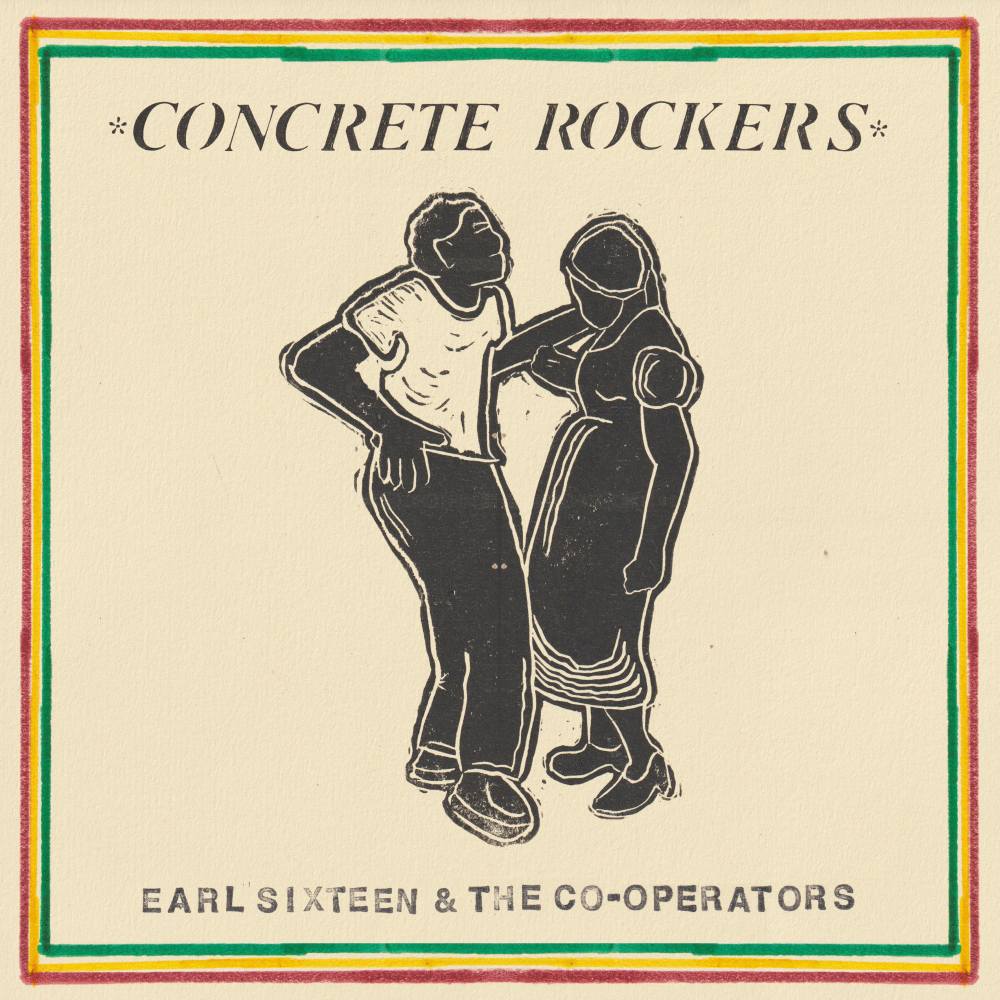
And working with Earl 16 on the Concrete Rockers album, alongside our friend Martin Poole, was a real pleasure. Watching someone with that level of experience – how quickly and instinctively he would lay down a vocal – was inspiring. It’s about capturing the moment, rather than overworking it.
Your work is clearly rooted in the tradition of roots reggae, without getting lost in it. What does “roots” mean to you personally – in sound, attitude, or the way you work?
It is important to acknowledge that this music that I love to the bone was born out of a struggle that as a white person I have not experienced. As much as roots reggae is a music that I love and have loved for many years it is also a visceral reminder of my privilege as a white person. Roots music sings about struggle, hope, love and dignity in a frequently indignant world. A world governed by wicked greedy men and megalomaniacs. Roots is, in part, an ever-present reminder that my love for this music must be an act of appreciation and not appropriation. I will forever be a student of this music and however many years I have been a student of it, it is not a school I can graduate from. And I say that with gratitude in my heart as without this music I would be truly lost.
Roots is also in many ways synonymous with Rastafari which is in part a spiritual response to colonialism. And this is a reminder again that we should not allow the unquantifiable wrongs of the past and present to become the unforgivable wrongs of the future. The people of Jamaica involved in the creation of roots reggae used music as a method of bringing about social change, talking about injustice and promoting unity. These are all important lessons that can translate and have translated around the world to other marginalised communities. To me roots music also stands as a declaration of pride, a lesson in history, progress and love.
Reggae has long carried themes like racism, exclusion and class struggle – and they feel as present as ever today. In that context, how do you see your role as a producer today? And when you look at the current roots and dub scene, what gives you hope or where would you like to see more depth or risk-taking?
Like many people past and present I was introduced to reggae music in my early teens through punk music. Punk Rocker & Natty Dread an alliance that has been ever present since the 1970s. As a result of cutting my teeth playing in punk bands it always felt of paramount importance to write songs that dealt with the political environment that we exist within/under. I think as a musician and producer I have an obligation to bring the news from my town to yours through music. I always admired how quickly it seemed the artists in Jamaica during the 1960s, 1970s and early 1980s could write and release music about current affairs. And how those songs would bring news from Jamaica to those who had moved to the UK, America or Canada for example. I guess I’d like to continue that tradition in the sense that I would like to tell the world about what’s happening where I am. I also have grown to realise that it is also a radical act to dance and be with other people dancing and for love to happen. Romantic or platonic. So I want to play my part to help that happen.
With regard to the current roots and dub scene. It is great to see a renewed interest amongst younger generations in the music that came from Jamaica from the early 60’s to the early 80’s. Lots of great producers, musicians and singers expressing a creative interest in more traditional record methods etc in a digital age.
Looking ahead: what is exciting you most right now – musically or humanly?
Working on new projects with new people. I love working with new artists. Both those I haven’t yet collaborated with and those new to the business. It is also a joy and a blessing to continue working with those who I have been fortunate enough to establish myself alongside. It is important to take your friends with you and not forget where you came from and who helped you along the way. And I want to always honour that.
And is there something you’ve been carrying for a while that you still want to bring into the world?
Alongside the album with Mo Kolours I hope to have another album that I started last year out before the end of this year. I’ll keep the details of that to myself for now but be sure to keep an eye out for news! I’m always working. I am recording new rhythms most weeks. They go into the vaults waiting to be voiced. Waiting for someone to pick them up and run with them.
 Can you tell us a bit about your new LP with Mo Kolours & The Co-Operators and how the whole HerbNest connection came together?
The ‘Concrete Rockers’ LP with Earl Sixteen came about due to my friendship with Martin Poole. I was introduced to him during COVID by our mutual friend Jasper. Jasper said ‘Hey I have a friend who loves reggae’ and he facilitated a meet up. We quickly became firm friends. Martin has been in the business since the 1970s he worked with a lot of artists in a kind of managerial position. He was a part of a record label called Copesetic. He worked with Night Doctor, tour managed Culture, worked with Augustus Pablo, Little Roy, Earl Sixteen the list could go on…. When we made the album with Earl it was kind of under the premise that Martin wanted to make one more record. But after we finished it he said something like ‘I don’t think that was the last record I wanna make’. So over the coming months the idea began to form around starting our own imprint to separate and differentiate between what I do on Waggle Dance Records and the work we do together. With me producing and Martin as Executive Producer. Martin’s son Alec (nice one Alec!!) came up with the name. Combining the name of Martins grandson Herbie and my daughter Nesta… and we thought perfect!!
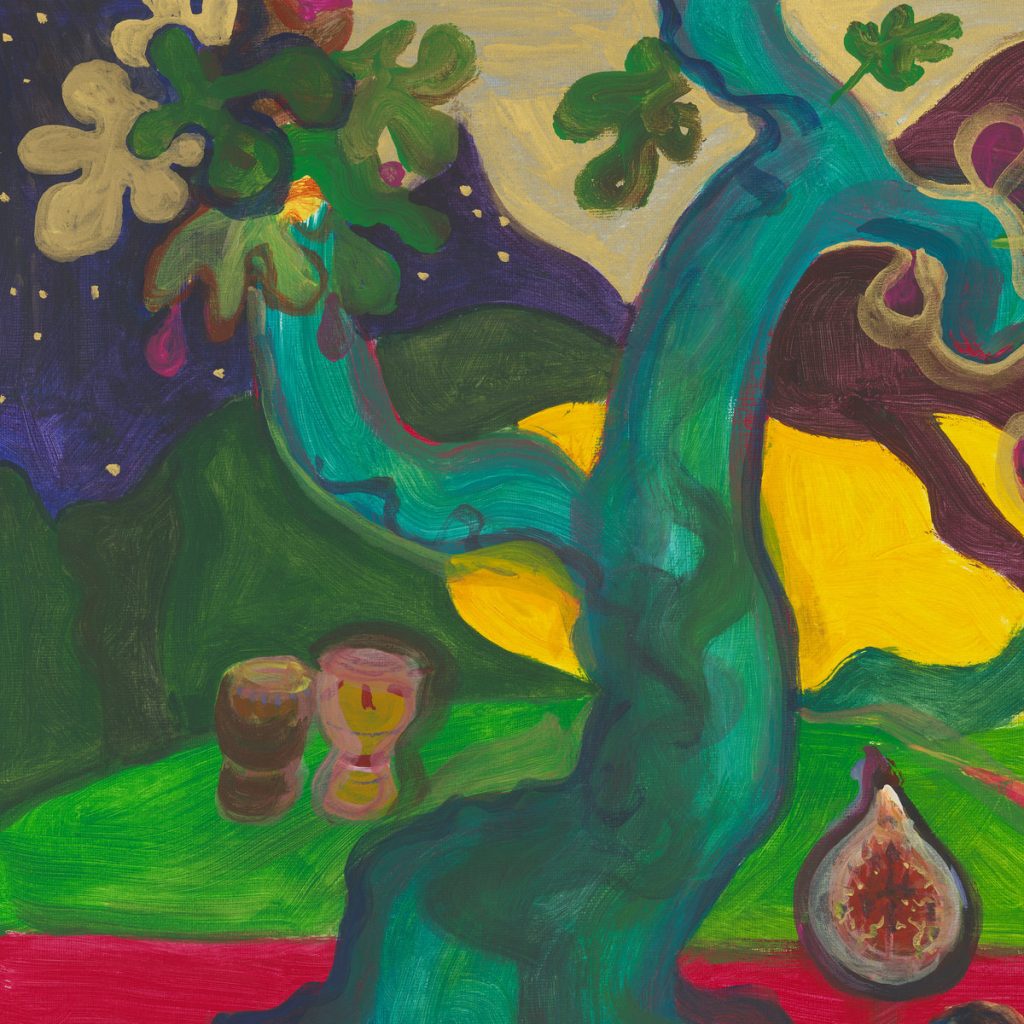
A lot of ideas started to get passed around with regards to artists we wanted to work with. Martin is well respected and well connected and that opened up some doors. At the same time we both liked the idea of working with new artists or artists not necessarily associated with reggae music. Or not exclusively at least. Mo Kolours had come in to my consciousness somehow. I’d seen the cover of his last LP and it sparked my interest. I sent a few tracks to Martin he liked his vibe and Alec also was aware of his music from a while back. Time moved on we worked on some music and kind of forgot about approaching Mo I guess.
Maybe six months later Martin calls me saying ‘I met this dread in town, wearing a nice pair of Clarks..’ (Martin is sharp and has an eye for good clobber..) ‘He’s called Joseph but goes by the name Mo Kolours, we should do something with him!’. At which point I reminded him that I’d already shown him his music and how weird it was that he’d met him. We thought kismet!!! As I had discerned he lived between London and somewhere in Japan, and here he is in our town in the west country. Martin contacted Mo and it took a bit of work to convince him to check out the vibes, but when he did….
Flash forward to February 2nd 2026 and the first session for what became ‘Fruits of the Diaspora’ happened. And the rest is history. Smokey sessions. Percussion covering every surface in the studio. Shakers on the piano, bells on the organ, one microphone, me and Mo crowding around. A heavy jungle atmosphere evolved!
 You’re also launching HerbNest with this release – what’s the idea behind it, and what kind of space do you want it to become?
HerbNest is going to be releases that are worked on by myself as producer and Martin Poole as Executive Producer. We want to have our own stable of artists that we work with so as to differentiate the imprint from Waggle Dance Records. And the intention is that the sound will differ at least slightly from the records I work on solo.
If someone discovers your music twenty years from now – what would you want them to hear in it beyond the sound itself?
I guess I want the sounds to be timeless. Brand new and ancient. It would be cool if people took a moment to work out when the music was made. Not that I’m trying to recreate something that has come before. But I’d like it to be rooted both in the tradition of the music that I love across all genres and also growing into the world that exists today.
Text/Interview: Christian Bautze-Boeke (6/2026)
Album Information
Fruits Of The Diaspora is the debut release on HerbNest, the new imprint founded by Martin Poole and Eeyun Purkins. Recorded between February and May 2026 in Bristol, the album combines deep roots reggae with Mauritian Sega influences, percussion-led arrangements and a collaborative approach that feels both ancient and entirely new.
Waggle Dance Records/HerbNest on Bandcamp