
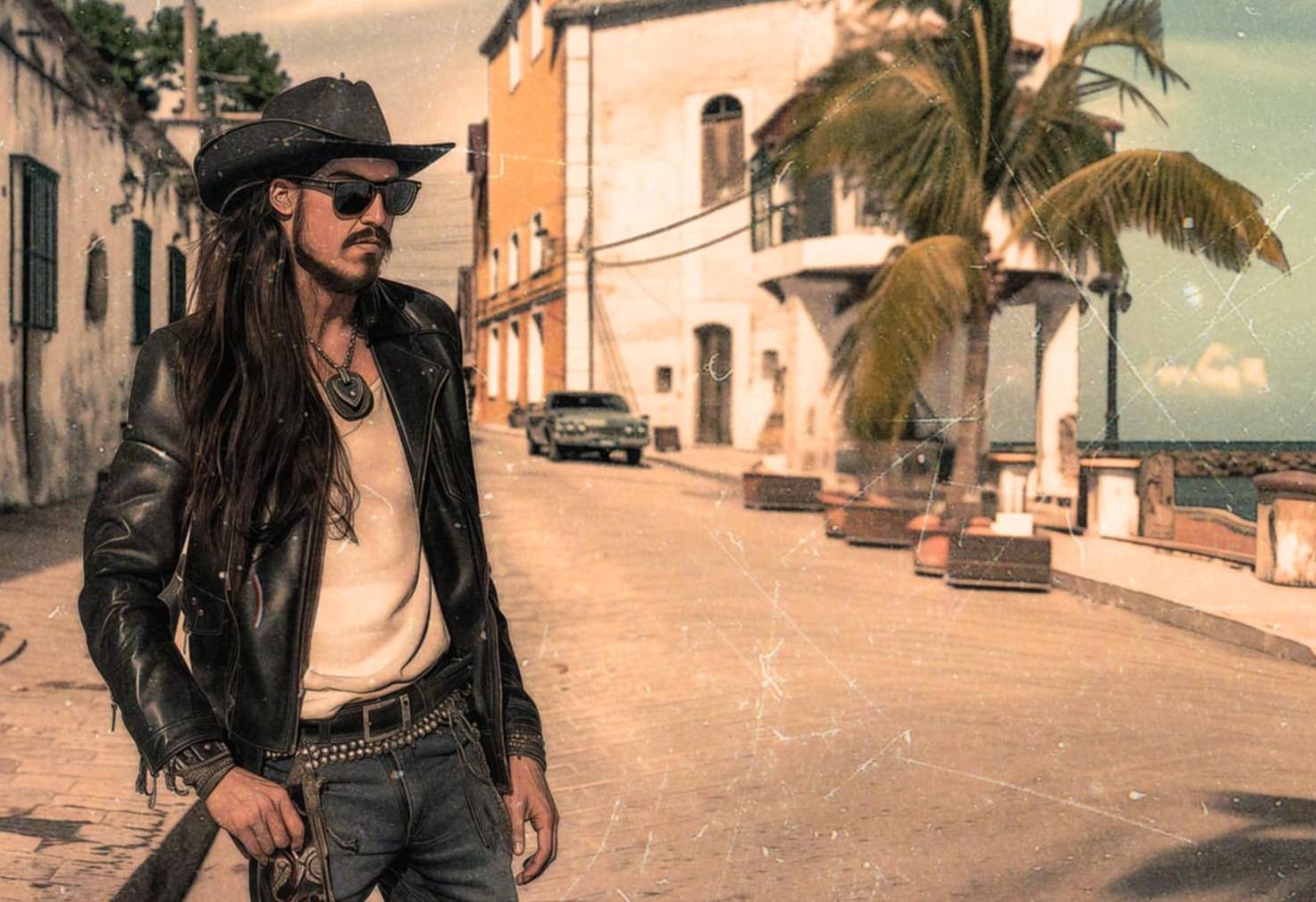
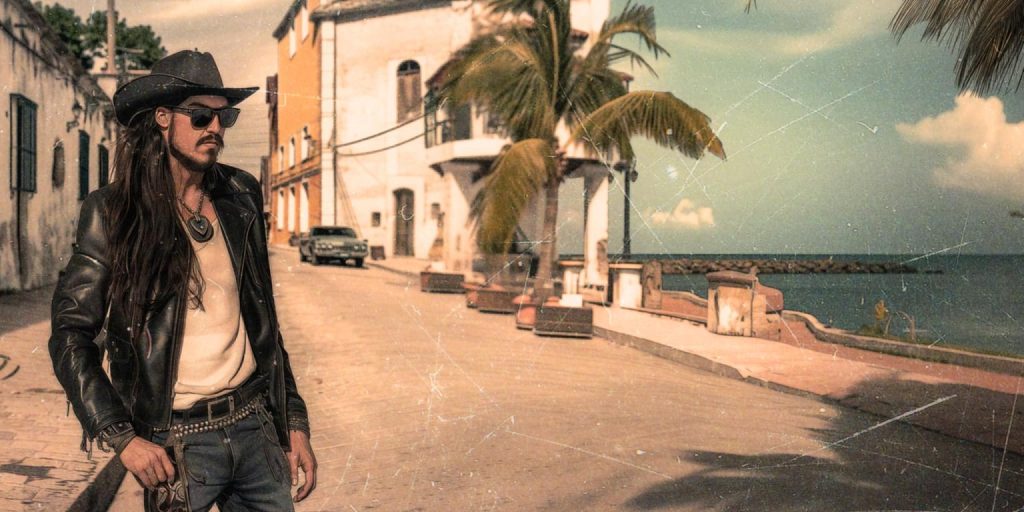
Haris Pilton
Somewhere in the Balkans, beyond the concrete and chaos, lives a man who plays with time, frequency, and memory. A man whose music sounds like it was born in Kingston’s Waterhouse district in 1978 – then dragged through muddy Balkan villages, sharpened by rebellion, and projected into the post-apocalyptic future. That man is Haris Pilton.
Positive Reality: The Studio No One Can Find
There is no confirmed address. No website. No photos of the entrance. Only whispers.
Positive Reality Studio, the headquarters of Haris Pilton’s sonic operations, is the stuff of legend. Some say it’s tucked inside a mountain. Others say it’s mobile, packed in vintage suitcases and moved from village to village. What we do know is that from this hidden laboratory of bass and delay, Pilton has engineered a sound that no one else has come close to replicating.
Over the years, fans and producers alike have asked the same question: How does he do it?
And the truth is – no one really knows.
Keeper Of the Flame: Old-School Dub In The 21st Century
While much of the world has moved on to polished, digital imitations of reggae and dub, Haris Pilton chose a different path. His productions are not just homages to the golden era of dub—they feel like they were dug up from the golden era itself.
Pilton’s dub is built the hard way:
with tape hiss.
with vintage spring reverbs.
with delays that feedback endlessly into cavernous space.
with basslines that don’t knock – they possess.
His devotion to the 1970s and early 80s Jamaican dub sound borders on spiritual. You can hear King Tubby’s ghost dancing in his mixes. Scientist’s chaos in the filter sweeps. Lee “Scratch” Perry’s madness in the arrangement. But these are not copies. These are reincarnations.
And yet, Pilton never lets nostalgia take over. His dub doesn’t pretend to be Jamaican – it’s Balkan Dub. Rooted in the rhythms of Marley and Pablo, yes, but also drenched in the local soil, history, and political tension of Southeast Europe.
“You can’t fake the old-school sound,” Pilton once said in an interview, “You either live it or you don’t. I just happen to be a time traveler with a mixer.”
Each track he produces is a meditation in patience and atmosphere. It’s not uncommon for Pilton to spend days carving out the right reverb tail, the right kind of vinyl crackle, the perfect swing of a hi-hat programmed to sound like it was played by a Kingston session musician in 1976.
In a world of presets and AI mastering, Pilton builds his sound from zero, using whatever tool—analog or digital—best translates the raw spirit of dub.
There’s even a rumor among close listeners that Pilton has digitally (or spiritually?) reconstructed the three legendary Jamaican studios of King Tubby, Scientist, and Lee Perry inside his own. No one knows if this is literal or symbolic. Perhaps both.
Dub Multiverse: Seven Albums In 2024
In 2024 alone, Haris Pilton released seven dub albums – each distinct in character, tone, and concept. Some are drenched in rootsy warmth. Others dive into deep space abstraction. One feels like it was recorded in a trench during wartime. Another like it’s a lost Channel One gem from a future timeline.
Each album is a chapter. A mood. A world.
Few producers today release with such volume and variation, and none with the consistency and character that Pilton maintains. His productivity is more than prolific – it’s a statement. A defiance of the industry’s pace and expectation. And yet, nothing sounds rushed.
These albums aren’t playlists. They’re audio novels, rich in subtext and smoke, often instrumental but always expressive.
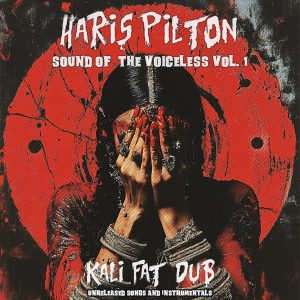 Kali Fat Dub: Balkan Resistance in Bass
And then, there’s the beast: Kali Fat Dub.
This is not just another dub band. It’s an audio weapon. A genre of its own, forged by Pilton’s will. Often described as Post-Apocalyptic Dub, “Kali Fat Dub” is where Haris Pilton unleashes his full sonic rebellion.
Launched as a reaction to the political stagnation and cultural decay of the Balkans, “Kali Fat Dub” blends:
heavy dub basslines
Balkan ethno melodies
metal and punk guitar riffs
militant drums
rap, poetry, and social commentary
The result is fierce. Unapologetic. Hard to define. Harder to ignore.
The first three albums – entirely in the Balkan language – channeled local rage and folklore into revolutionary soundtracks. With a new vocalist, the project now expands outward, connecting with an international audience, while keeping its radical core intact. The fifth album is currently in the works, and expectations are high. If previous releases were molotov cocktails, this one might be a missile.
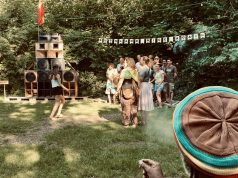
“Kali Fat Dub” has toured extensively across the Balkan Peninsula, playing everywhere from punk squats to massive festivals. Every show is a ritual. A protest. A party in the ruins.
Beyond Borders: Ufoslavians And The Balkan Beat Movement
While known for dub, Pilton has also helped shape the Balkan Beat genre, blending traditional rhythms with modern production.
His project The Ufoslavians, a reggae-dub Balkan band, has performed at major festivals across Europe. Built from the ground up by Pilton, the band channels ska, dub, Balkan melodies, and even dancehall into a genre-bending explosion of joy and rebellion.
Every performance is a journey through Balkan diaspora—equal parts carnival and confrontation.
Balkan Voodoo Orchestra: The Next Chapter
If “Kali Fat Dub” is the war, then Balkan Voodoo Orchestra is the ceremony.
This newest project, recently signed to Germany’s Asphalt Tango Records, is a world music eruption with the unmistakable DNA of dub pulsing through it. Combining Balkan brass, Colombian cumbia rhythms, Bulgarian choirs, and deep dub atmospheres, the project is already being called the next big thing.
For Pilton, it’s another evolution. Another reincarnation.
The Space Cowboy: Doggy Brasco
Not content to stay within borders or genres, Pilton also created Doggy Brasco, a surreal, genre-bending experiment he calls space cowboy neo-rodeo country. Think outlaw aesthetics meets dub engineering. It’s bizarre. It’s brilliant. And like everything Pilton touches – it works.
The Producer Behind The Curtain
Despite the mythos, Haris Pilton is a producer in the truest sense. He’s not just a knob-turner. He’s a visionary director, often playing most instruments himself—from bass and drums to guitars and keys. Only brass is regularly outsourced to a small circle of trusted collaborators.
His sound is handmade, personal, alive.
He treats every song like a living organism:
the bass is the blood.
the rhythm is the bones.
the dub effects are the nervous system.
And the silence in between? That’s where the soul lives.
300+ Shows, 1 Legacy
As a DJ, Haris Pilton has played more than 300 shows across Europe. Reggae sets, dub sessions, vinyl specials, live performances – it doesn’t matter. He reads the crowd like scripture. He delivers like prophecy.
But Haris Pilton isn’t about the numbers. He’s about the message. The vibe. The reality.
Final Word: Dub Is Not Dead – It’s Hiding In The Balkans
In a world of recycled beats and fading roots, Haris Pilton is a lighthouse—guiding the lost, the passionate, and the radical back to the source. His dub is not a gimmick. It’s not “retro”. It’s real. It’s what dub was always meant to be: rebellious, spacious, mystical, political, spiritual and endless.
He’s more than a producer. He’s a dub sorcerer, a Balkan sonic warrior, a global underground legend.
And if you ever hear something shaking your walls at 3 a.m. in the middle of nowhere—it might just be coming from Positive Reality Studio.
You won’t find it on Google Maps. But your soul will recognize it.





Nuff respect in every aspect! Big up!