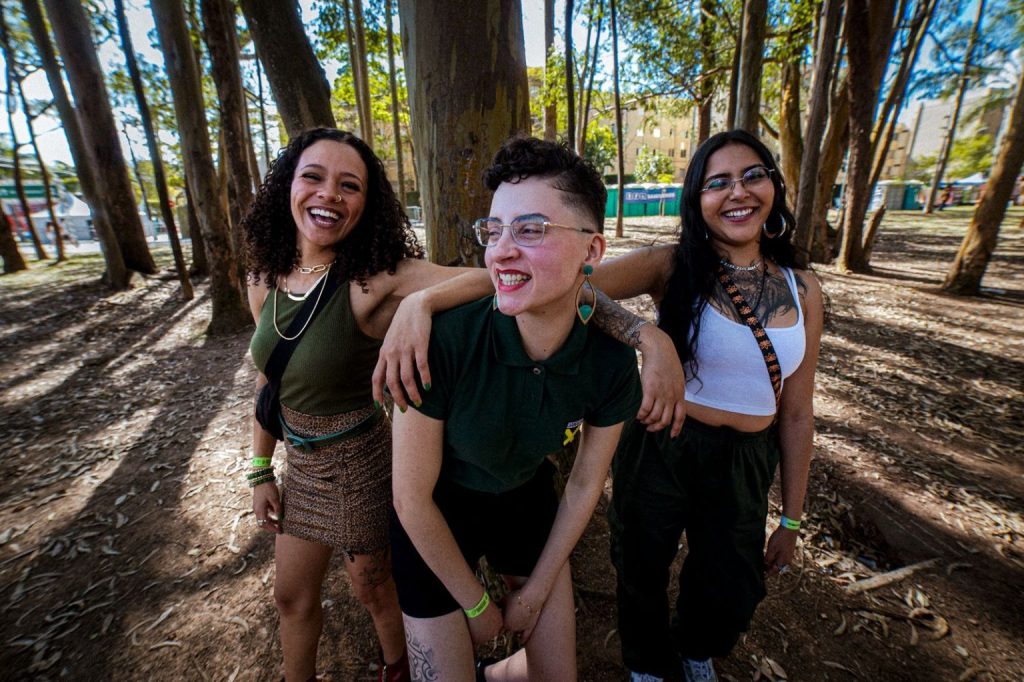
Dieses Soundsystem-Interview ist ein Teil einer Reihe. Weitere Interviews findest du fortan in unserer Kategorie Soundsystem Culture.
Jah Queens Sounds
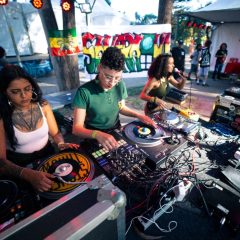
From the streets of São Paulo to the heart of sound system culture, Jah Queens Sounds stand for energy, independence, and collective strength. Rooted in reggae and driven by a clear vision, this female collective is carving out its own space—on their own terms. In this interview, they share their journey, their sound, and what it means to build culture from the ground up.
How did Jah Queens Sounds start and what motivated you to forge your own path as a female collective in São Paulo?
Our story begins in 2018 in the East Zone of São Paulo, at the Ajax field, during a session by Ras Furue Sound System. In the beginning, we had very few resources but a huge desire to make things happen.
I, Kakau, started playing without knowing how to use the equipment, but I sought out knowledge in workshops and every free course I could find. I am very grateful to the collectives that held cultural workshops back then, because it was in those spaces that I had the opportunity to learn about sound in practice – something essential to my development.
Jah Queens Sounds emerged from the meeting of women who were already living the music and sound system culture, inspired by major references like Feminine Hi-Fi, Karen Matos, Brasa Bass, Woman of the Ghetto and our friend and selector Lady Moon – women who were active in sound system culture before Jah Queens was born and who were our inspiration. What motivated us to follow this path was the desire to build alongside other women in music, to grow through exchange and collective experience, and to create a space where we could develop autonomy, production and creativity together.
A space where it is possible to host a beautiful event even with the basics, where collective energy sustains what is lacking in infrastructure, and where every detail carries intention and care. It’s also about creating an environment where people feel good, can breathe a little away from the weight of the week and can simply exist in freedom – dancing, jumping, and surrendering to the sound. And where even that person who doesn’t sing every weekend, but arrives at a Queens session and can’t help themselves, finds the courage to grab the mic and express themselves like never before.
In the end, Jah Queens Sounds is this: a space for construction, connection and freedom through music.
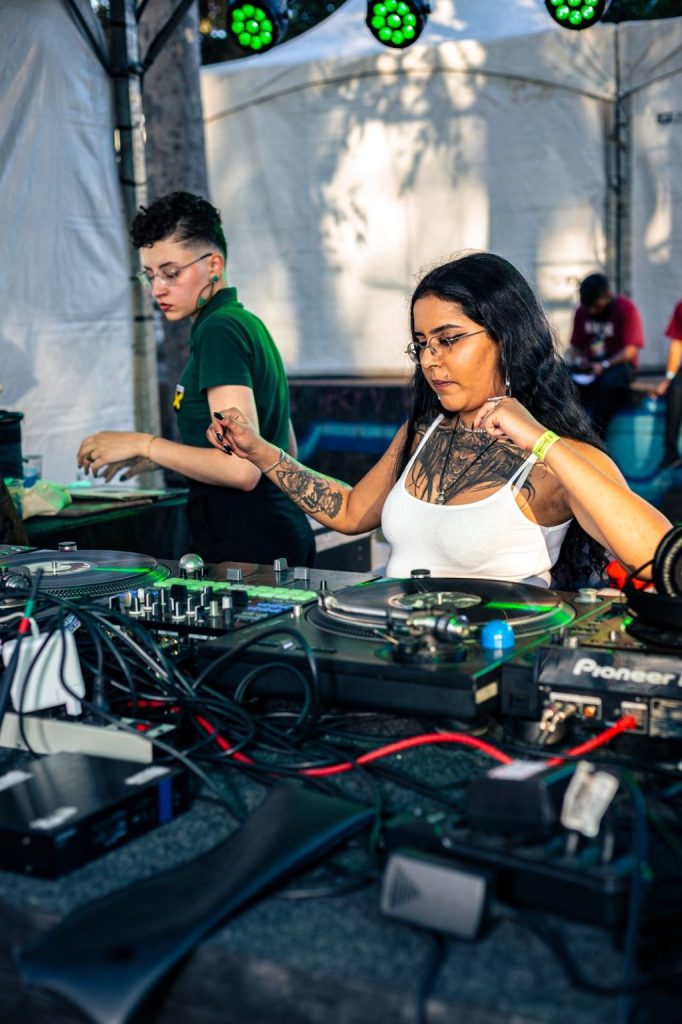 When you play today, what do you want people to feel when they are in front of your sound?
When we play, I want people to forget their problems, even if just for a moment. I want the music to pierce through the body, enter the veins and the mind and make the heart beat stronger.
I want them to feel happy, free, and safe to express themselves – whether by jumping, shouting, or dancing however they want. It’s about living that moment completely, without judgment, just feeling the music.
What defines a Jah Queens session musically? How do you build your selection and what makes someone immediately recognize your identity?
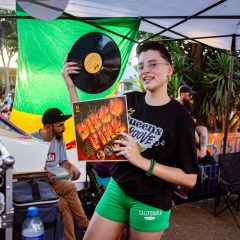
Musically, a Jah Queens session is marked by a selection that values classics and the essence of reggae. We have a very strong connection with vinyl – we love to play and collect true classics like “Call The Police” by John Wayne or the Sleng Teng Riddim, which is always a hit in our sessions and leads to many pull-ups.
Building the set also involves sensitivity. We like to think about the event’s vibe and arrive early to hear other DJs and selectors, understanding how the crowd is reacting. This directly influences the energy of our selection.
Generally, I like to build sets with plenty of Roots and Dubwise, but also with special segments – like selections featuring only female vocals or reggae versions of well-known songs, which get a new interpretation and usually connect deeply with the audience.
I think what makes someone recognize our identity is exactly this mix: respect for the roots, musical research, sensitivity to the dancefloor and a curation that holds intention and history.
If you were to describe the São Paulo scene: what differentiates it from what many people know of Europe – musically, socially, or in the way sound system culture is lived?
The main difference is that here in São Paulo, sound system culture is still often marginalized. It happens largely in the ghettos and the peripheries (periferias), because it is in those territories that the sound system is truly embraced, lived and strengthened.
Unlike many places in Europe, where the sound system has been more institutionalized and incorporated into festivals and more structured cultural circuits, here it still carries a character of independence, resistance and the occupation of public space. In São Paulo, for example, the movement grows on the streets, in squares and open spaces, precisely as a way to bring culture and leisure to places where access is often limited.
Furthermore, the scene here is deeply shaped by social issues. Sound system is not just about music – it’s about territory, identity, and the peripheral experience. It connects with other movements like hip-hop and brings together youth from different realities, creating spaces for encounter, expression and belonging.
So, more than a musical difference, it’s a difference of context: here, the sound system is a necessity, it is resistance and it is collective construction within a reality that often tries to silence these voices.
Where do you see yourselves within the Brazilian history of reggae, radiolas and sound systems?
There is a trajectory built by those who came before, mainly in the peripheral territories, and we honor that. But Jah Queens Sounds arrives to continue this history while simultaneously challenging and expanding it.
We are women, and we are taking control of the turntables, the selection, the production and the narrative. Each of us has our own experience, but we are connected by a reality of the “hustle” (corre), of building from the ground up and of limited access within music.
Our presence changes the logic. We strengthen other women, open paths and show, in practice, that the sound system is also a territory that can and must be occupied by us.
 Was there a moment when it became clear to you: “We need to create our own space, otherwise no one will do it for us”?
Yes, there was, and it wasn’t just one moment; there were several. They came through hardships, frustrations and situations with people who didn’t keep their word. In practice, we understood that existing spaces weren’t always open to us – and when they were, it wasn’t in a fair, consistent, or respectful way. Often, we were pushed aside or underestimated. That’s when the switch flipped: if we wanted to truly exist within the scene, we would need to build our own space.
And that’s what we did. We started investing in our own structure and carving out an independent path – not just out of necessity, but also as a choice for autonomy.
Today, besides guaranteeing our own space, we are also concerned with creating opportunities for other women. Because when we build our own, we don’t walk alone – we clear the path for others to arrive too.
Where does the idea of “Female Strength” become concrete in your daily work?
“Female strength” goes beyond the idea of collective support or group organization. This strength lies in the capacity that we, as women, have to turn “nothing” into “everything”—to make things happen even without infrastructure, without incentives and often without the support we wish we had.
It’s about sustaining, creating, pushing, and not letting things drop, even when it’s hard. It’s a strength that comes from lived experience, from necessity and from the responsibility we’ve often carried since childhood.
In daily life, this strength manifests much more in persistence and construction – in continuing to do, learn and open paths, regardless of the conditions. It is the strength to not stop and to transform, even when it feels like I’m doing it alone. And then we remember that we are surrounded by other women living this same daily struggle.
What situations showed you that, as women, you still need to assert yourselves within this culture?
Being a woman within this culture still requires a constant reaffirmation of our presence and our work. Not in the sense of proving something to others all the time, but of sustaining, in practice, the space we have been building.
This shows how we are still in a process of consolidating recognition within the scene, where occupying certain spaces still demands more insistence, more consistency, and more continuous construction.
But, at the same time, this also strengthens our identity. We learn to trust what we do, to stand by our own trajectory and to keep opening the way, even when it isn’t fully visible yet.
How does the reality of São Paulo influence your posture and your sessions?
São Paulo is an intense, unequal, and fast-paced city, where we live daily with pressure but also with the immense cultural power coming from the peripheries. There is a strong sense of territory here.
The culture is born largely from the periphery, the street, improvisation, and resistance. This directly influences our posture: we arrive with responsibility, with truth and with the understanding that every session is also a collective gathering.
In the end, all of this shapes our identity. The city is harsh, but it is also alive – and it is from this mixture that the energy we put into the sound is born.
Looking at the international scene: where do you feel connected with European sound systems and where do you think Brazil’s reality still needs to be better understood?
Our connection with the European scene lies in the “architecture of sound” and the “liturgy” of the session. We draw from the technical and spiritual source of masters like Channel One and Jah Shaka to understand the impact of Dub and the importance of the physical sonic experience.
However, what the international scene still needs to understand about Brazil is our ability to articulate culture within public policy. Unlike Europe, where support is often already consolidated, in São Paulo we fight to access and occupy cultural grants (editais de fomento).
Jah Queens, for example, was selected twice by the Programa VAI [a municipal cultural grant], and it was through this State recognition that we were able to build our equipment and host our events. This shows that our reality is not just about a “lack” of resources, but about the competence to transform public funding into direct social impact in the periphery. In Brazil, the sound system is not just entertainment; it is a movement that requires management, resistance and the strategic occupation of the “asphalt” to democratize access to culture.
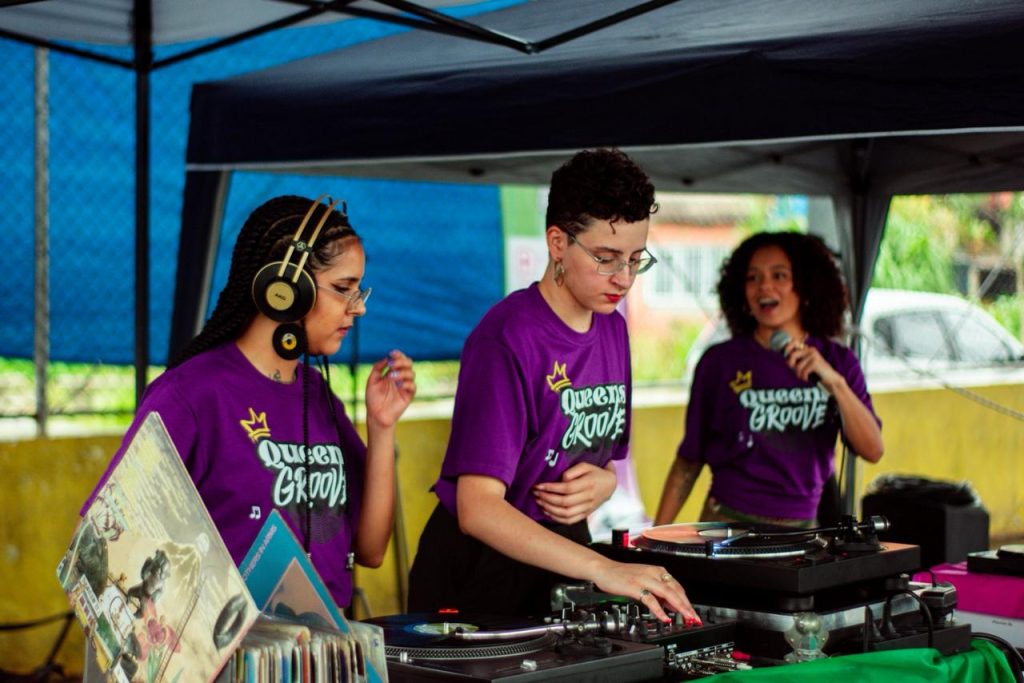
With “Queens Groove,” you created your own format. What was the vision behind it and what did you want to do differently?
Queens Groove was born as a plural and multicultural event that connects the sound system format with the four elements of hip-hop. We start from the understanding that peripheral musicality is diverse and versatile and that genres like rap, reggae, house, funk, and soul come from the same root – they dialogue with each other and tell similar stories.
Our vision was precisely to expand the traditional sound system format, opening space for this sonic diversity and also for other artistic languages. The event brings together female singers, MCs, performances by dancers and b-girls, as well as visual interventions like graffiti—always prioritizing the participation of women.
More than an event, Queens Groove is a political space. All these expressions are born from Black people from the periphery, and our goal is to strengthen these narratives, using culture as a tool of resistance and confrontation against a system that affects and oppresses us daily. It’s about creating possibilities, strengthening networks, and ensuring that our voices, bodies and stories occupy the center – no longer the margins. Queens Groove is, above all, a movement of collective construction where art becomes a tool for transformation.
What happens at Queens Groove that often doesn’t find space in a traditional club or sound system context?
The main difference of Queens Groove is the commitment to female protagonist roles in the project’s construction. In many traditional club or sound system contexts, there is still a male predominance, where visibility and opportunities are concentrated in that demographic.
At Queens Groove, we have been challenging this in practice, understanding that each edition is part of an ongoing process. In some, we had a mostly female presence in production, DJs, singers, graffiti artists and dancers, in addition to featuring the female sound system Mumma Powah Sound System by our friend and selector Rude Mamma. In others, we featured female singers and artists alongside male sound systems. This shows that the project is not a fixed format, but a movement that adjusts and expands possibilities with each edition.
Additionally, the event opens space for other expressions that often don’t find a place in these environments, such as dance performances, visual interventions like graffiti and a musical curation connected to peripheral culture.
Thank you so much for the invitation, the time, and the space. It was very special to participate in this interview and share a bit of our trajectory. Respect and love from the sound system culture. We are very happy to be part of this exchange.
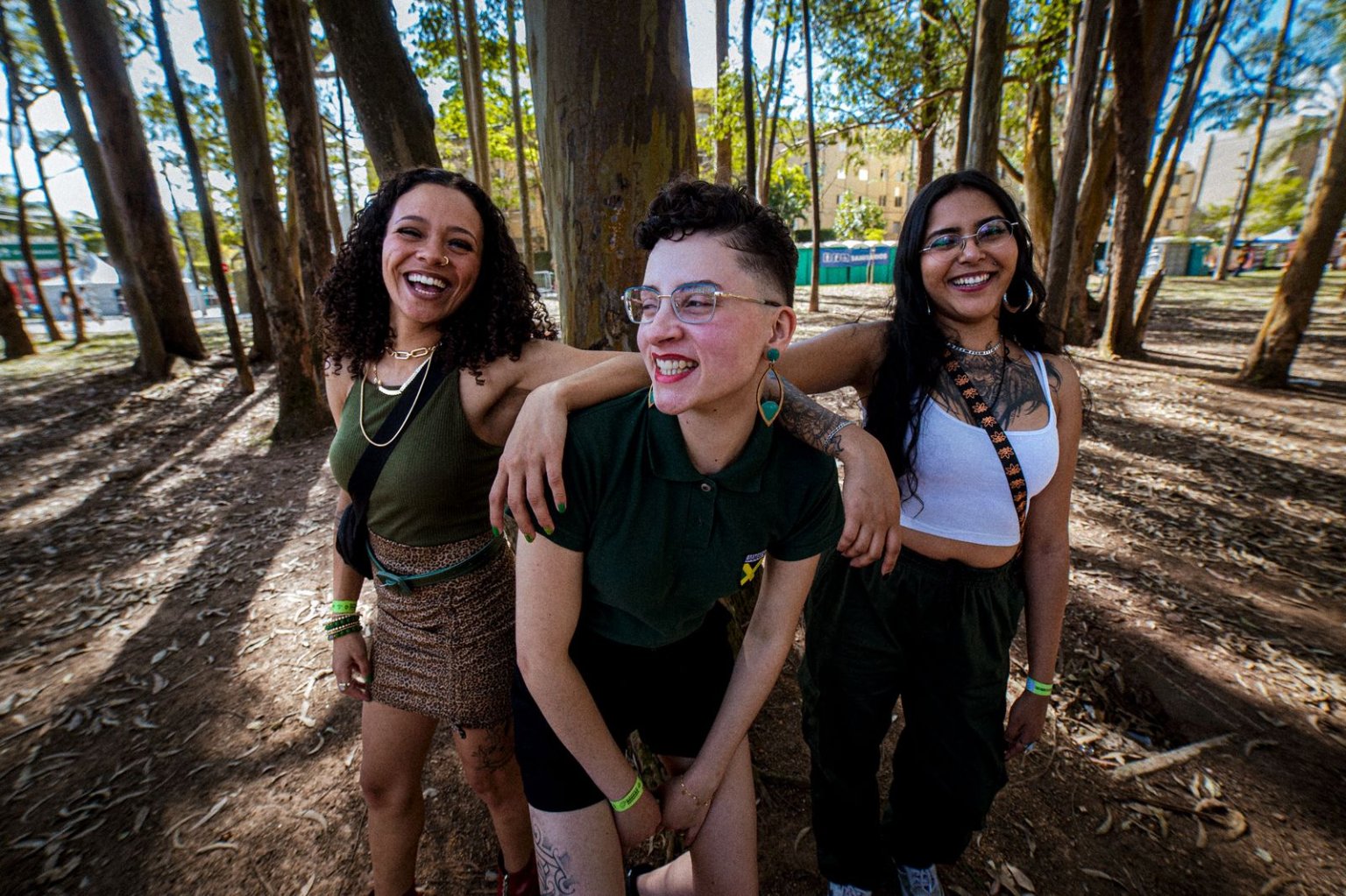
Jah Queens Sounds – Kakau (DJ), Lady Blu (DJ), and Jahpam (Singer)
Interview: Christian Bautze-Boeke (4/2026)