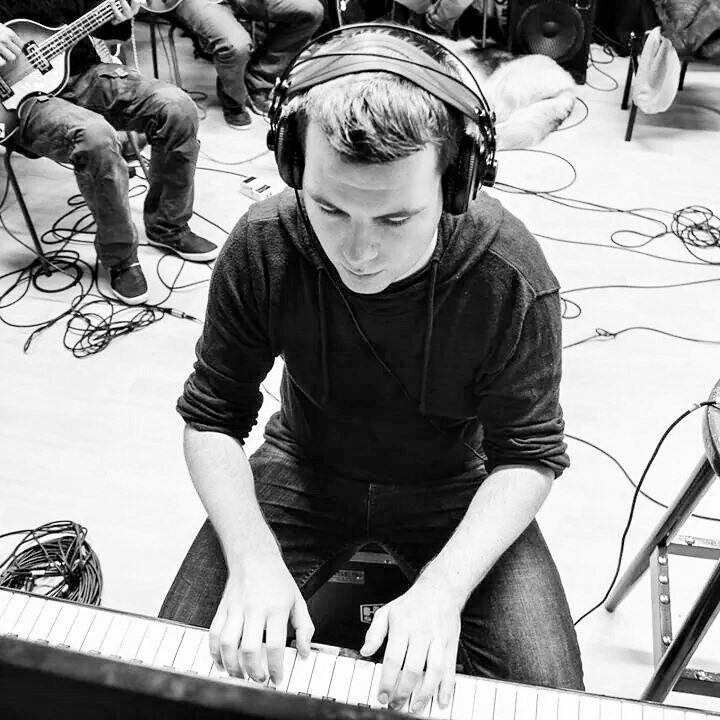
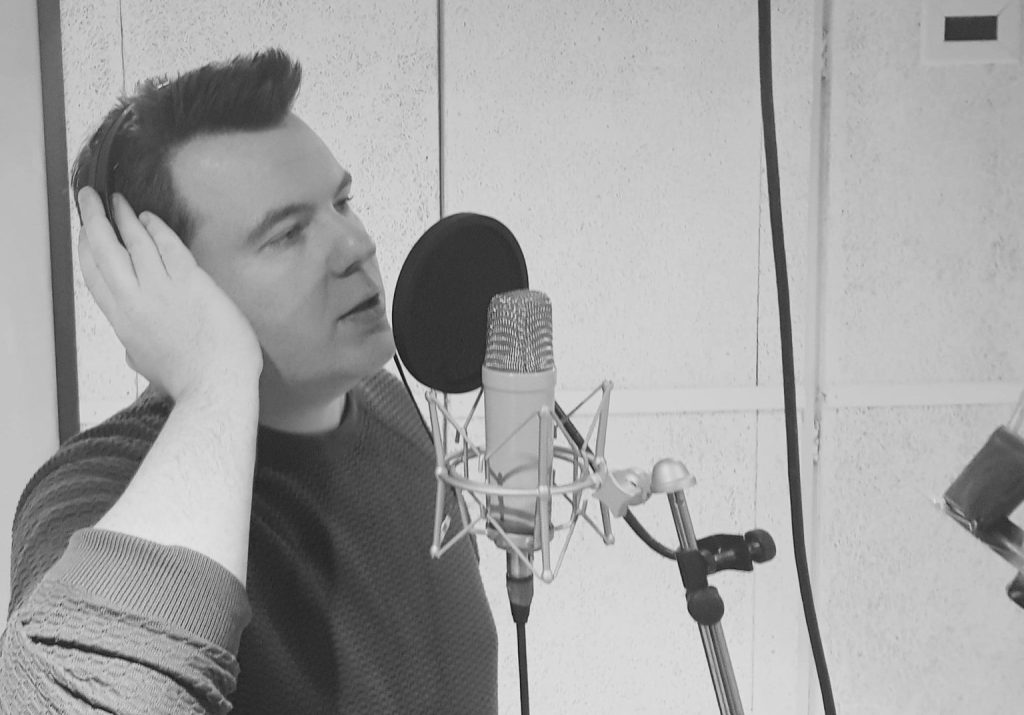
Jojo Gladdy
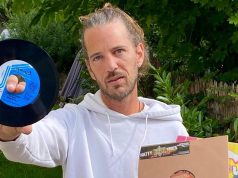
In a world where music is often seen as a commodity rather than an expression of soul and resistance, reggae remains a distinct voice for those seeking depth and truth. One artist who lives and breathes this spirit in his music is Jojo Gladdy – musician, producer, and a true keeper of the classic reggae sound. Since the early days of Channel 1, Jojo has not only internalized the riddims but also the philosophy behind this music. While he passionately nurtures the roots of reggae, he’s always open to new influences. From the impact of Japanese enka music to the question of how to stay “real” as an artist, Jojo offers a fascinating insight into his creative journey, his sources of inspiration, and the challenges of today’s music industry.
Reggae as a spiritual weapon?
Reggae has always been more than just music – it’s a voice of resistance, spirituality, and identity.
Do you think reggae still has the power to ignite social change, or has the industry watered it down?
Globally, not so much, but on a personal level, yes. I still believe reggae has the power to change an individuals mind.
You are both a producer and a singer. How do you know when a song is truly “finished” and has that magic to last forever? Is there a secret formula for creating music that really touches people?
I use the old method from the Channel 1 days – I finish a song rather quickly. If you overwork a track, the charm fades. I think there is a lot of overproduced music out there.
The Magic of the first take – or just a myth? Many artists say the first recording is often the best because it is raw and real. Do you believe in that, or are you someone who polishes a track for hours until it is perfect?
As I said before, my songs are usually done within 60 minutes—riddim building, voicing, and mixing. However, I do have a habit of making multiple versions of a song, same lyrics but with different style backing tracks but still using the 60min rule.
 Enka & reggae – an unexpected connection. Why?
Before 2013, it was all reggae for me, particularly the Channel 1 style. In 2014, I began to shift a bit and became more open to different types of music – bands like Whitest Boy Alive, Kings of Convenience, Alice Phoebe Lou and Daughter. During that time, I also watched many Hong Kong movies, and I was surprised to discover that many of the beautiful soundtracks were covers of Japanese songs. That was when I first connected to Japanese music. My first enka experience was NOT great. I bought an album by Mori Shinichi called “Inochi Ataete” and when I listened to it, I thought it was absolutely atrocious! I put it away and did not touch it for a while. However, I still kept buying Japanese music, mainly kayokyoku, and during that period, I discovered two singers, Mitamura Kunihiko and Miura Tomokazu, who are both also actors. Even though they’re not enka artists, I believe they have the best voices in Japanese music.
My enka journey truly began, when I decided to sell the records I wasn’t listening to and pulled out that Mori Shinichi LP again. This time, when I played it, it hit me right in the heart. Now, in 2025, I’ve collected over 3,000 enka singles, mostly obscure enka from the 80s.. Same with reggae I have always loved the “one day fly artist”. I always say enka is the music I listen to, and reggae is my work. For me, enka gives me strength when I’m down, and when I’m happy, it makes me even happier. It gives me a certain energy. I also have a big weakness for the Japanese language – I wouldn’t even care if a Japanese singer sang the telephone book, I’d still listen to it! Hahaha.
If I had to reinterpret a classic enka song as a reggae track, it would be Kiyoshi Yamaguchi’s “Onna Banna” (“山口きよし – おんな花”). It already has a bit of the same groove as reggae, and it’s one of my favorite enka songs.
The lost art of deep basslines... Reggae lives through the bass. Many modern productions focus more on highs and digital sounds. Are we losing the art of using bass as a “second voice” in a song?
Yeah usually in my productions the vocal line mimics the bass line. When I have a lyric idea, I always try to follow my voice melody with the bass line. Therefore, you can say the bass is very important for reggae, but I think the rest is just as crucial.
Roots vs. hype – how do you stay “real”? Reggae today blends with many influences: afrobeats, trap, EDM. How do you balance tradition and innovation without losing your essence?
I try to stay true to the ‘Roots Radics’ style of reggae, or the early ’80s Jamaican reggae sound, as much as possible. Sometimes I experiment with synthesizers, Simmons drums (which you can hear in tracks like ‘Mother In Law’), and other elements. But no matter what, the ‘Roots Radics’ or the early to mid-’80s era will always be the foundation of my music
For me, it is also about staying true to what you sing. For my first album Jojo, I sang about Rastafari a lot, and that was, for me, a mistake, because I didn’t preach Rastafari teachings. Therefore, I don’t do it anymore.
On a side note… As for modern reggae, while I wish Koffee all the best, I found it strange when she won a Reggae Grammy a few years back. I listened to the album, and to me, it felt like maybe 5% reggae. It was mostly hip-hop, and that was very weird to me, but that’s just my personal take. There are so many beautiful albums out there, like the Kumar album produced by my friend Mathias Liegme from Fruits Records located in Geneva, that don’t get the attention they deserve.
 The Moment That Changed Everything. Every artist has that one moment that shifts everything – a meeting, a song, a crisis. Was there a situation in your career that completely changed the way you see yourself as an artist?
Back in 2011, I was a bit dark in my mind and I discovered the wonderful piano playing of Gladstone “Gladdy” Anderson (1934–2015). Although I never met him, this man shaped me as an artist and as a person overall, giving me a clear goal. I loved his piano style so much that I wanted to play exactly like him, and it took me almost ten years to accomplish that, with the help of a Jamaican producer (who I won’t mention out of respect) who gave me a few Channel 1 multi-tracks with Gladdy’s isolated piano parts. These helped me a lot in learning how this man thought musically.
Some people talked me down, saying I was stealing his style and that I should be myself. But I like to say that I am Gladdy’s style, because I honestly don’t know anything else. One of the biggest compliments I received was from his daughter. When I showed her one of my riddims, she told me, “It’s like I hear my father.” I can proudly say that I owe my musical career to two people: Seb Westfinga and Gladdy Anderson.
I also called myself Jojo Gladstone because of my love for Gladdy, and they started calling me Jojo because of love for Channel 1 studio. As many of you know, one of the owners was named Jojo Hookim, and most English-speaking people could never pronounce my birth name correctly.
Studio or stage – where does music truly live? Some artists say music comes to life in the studio, others feel truly alive only on stage. For you, what is the real home of music – the silent perfection of the studio or the uncontrollable chaos of a live performance?
I love the studio – it’s my ultimate passion. If I ever win the lottery, I’ll build myself a full-fledged studio with drums, an acoustic piano (I use MIDI, but I hate it), an organ, and everything as organic as possible. In my opinion, reggae sounds best when a rhythm is played live by seven musicians in the studio, ideally without overdubs. I think that’s why I love the Roots Radics so much and old Sly and Robbie – the way they could knock out a riddim track in 10 minutes without rehearsal. That’s true musicianship.
If you could invent a new music genre… Reggae evolved from Ska, Dub revolutionized the sound, and Dancehall brought the digital era. If you could create an entirely new genre – what would it be, and how would it sound?
I’ve always had a wish to blend kayokyoku (Japanese showa pop music) with reggae. In fact, I started working on an album with my good friend Bram Wouters, who sadly passed away a few years ago. Unfortunately, despite many promises, the label ran into some problems, and the album was cancelled. I am afraid it will never see the light of day. The album was for 80% done. I’d also love to create a Nyabinghi Reggae album with my friend Zion Love from America. Maybe one day. But that genre already exist I think.
What remains when the music fades? At some point, every artist grows quieter. When you one day stop making music – what do you want to be remembered for? What legacy do you want to leave behind?
I don’t think I’m the kind of person who needs a legacy. I do music because I genuinely love the process of creating. I also don’t enjoy listening to my music with others; it makes me really uncomfortable
Looking ahead, what’s the ultimate dream project you’d love to work on? Is there something that you haven’t yet explored that you’d love to dive into?
For me, my absolute dream would be to create albums for different artists, like my good friends Earl Cunningham or Michael Palmer (both of whom are wonderful people). I’d also love to create an album with Lila Ike – she has such a beautiful voice, and I’d love to hear her in full glory with a Jojo Soul Prof All Star vibe (think seven musicians live in the studio).
Unfortunately, as much as I love this idea, money is always an issue. To do things this way, you need the funds – paying for six musicians (I’d play piano), travel costs, studio time and mostly the singer, and the fact that this style of music, like Rub a Dub, is niche. makes it hard to make your money back on an LP. So, for now, it remains a dream.
Dear Jojo, thank you so much for this Interview.
All the best for youre future Plans and Dreams!
どうもありがとうございます。
Dōmo arigatōgozaimasu.
Interview: Christian (03/2025)