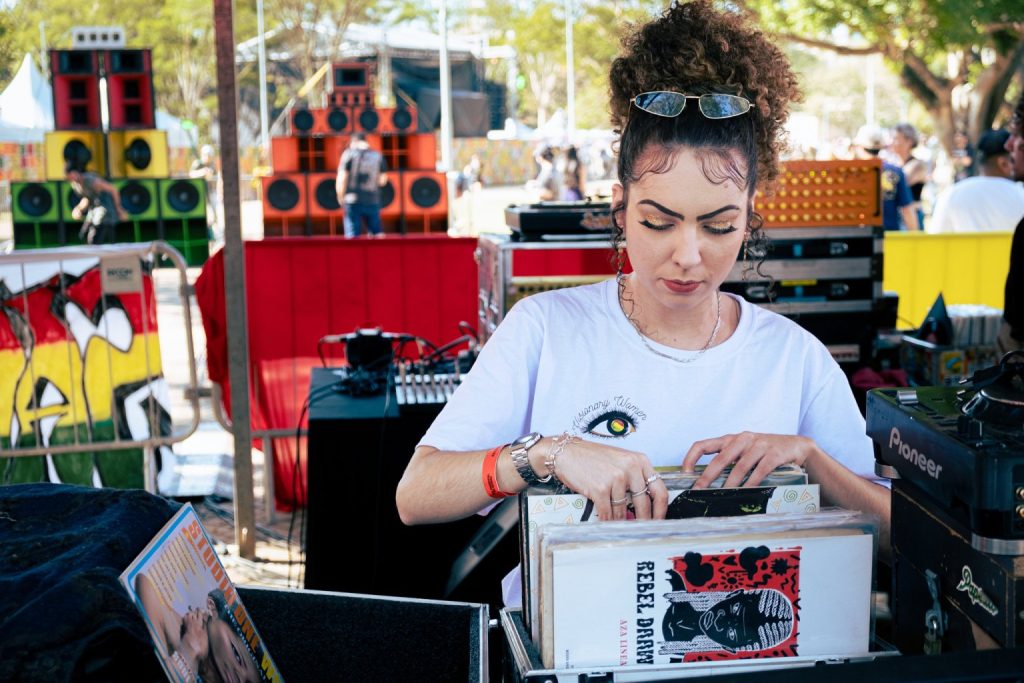
Visionary Women
Brazil’s Sound System scene radiates tremendous energy to the world. Here, we focus on the women who shape the scene in their own unique way. Following our recent interview with Jah Queens Sounds, we at Irieites.de are now presenting an interview with Janaina Ferreira of Visionary Women.
For people outside Brazil: who are Visionary Women and what was the original vision behind the collective?
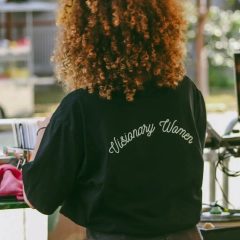
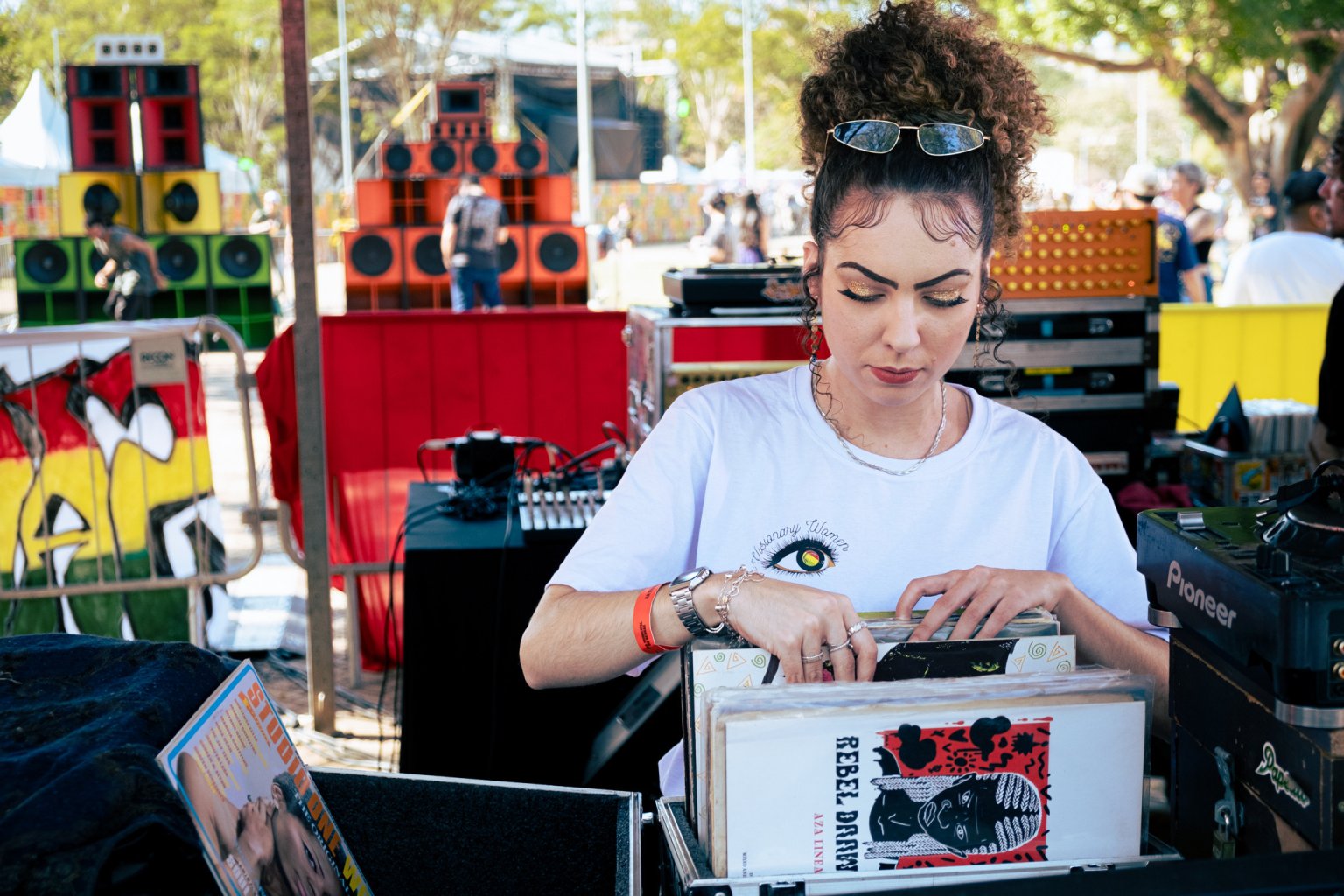
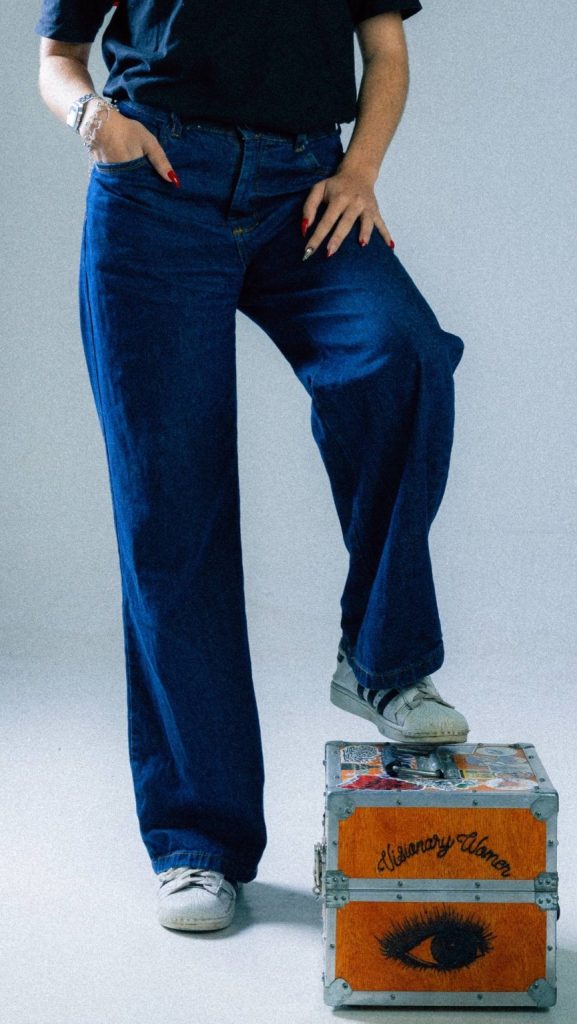
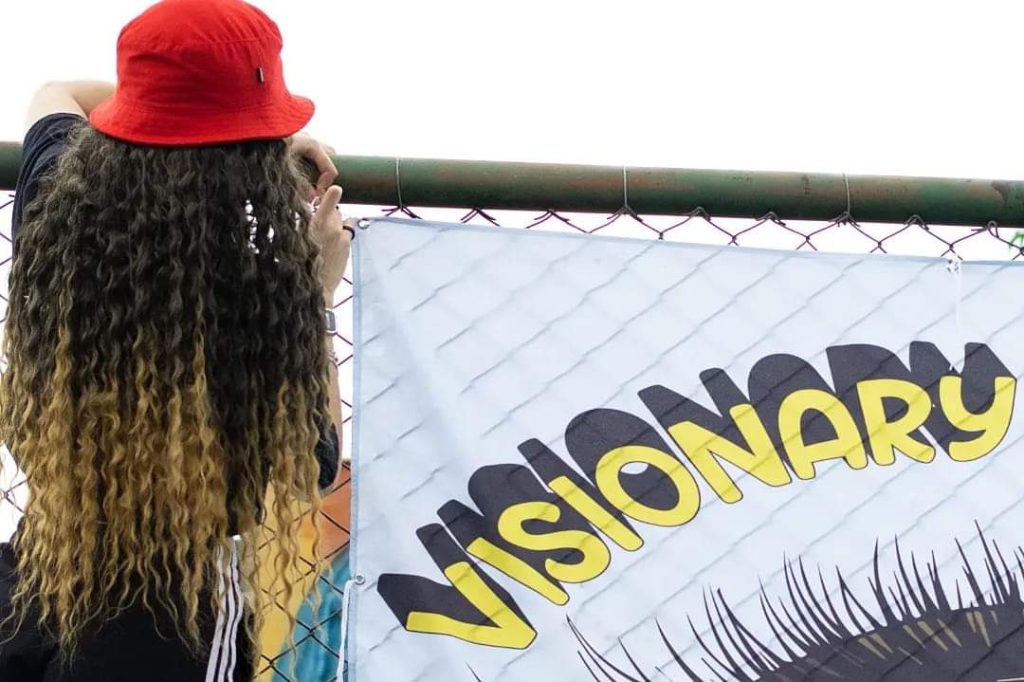
JANAH: Visionary Women is an independent cultural movement from the city of Guarulhos, located in the state of São Paulo, Brazil. The Visionary collective was founded on March 8, 2022, by me, cultural producer Janaina Ferreira, born and raised in Guarulhos. Breaking all the limitations imposed by a sexist environment, Visionary arrived claiming its space with great focus and determination within the Sound System culture, with the purpose of spreading female visions through reggae music. And in constant movement throughout the state of São Paulo ever since, Visionary has been acting solidly and conquering more and more spaces. Currently, Visionary is composed of only one member: Janaina. But over the years, Visionary has also become a great support network for women who are active within this culture. I usually say, that I am a woman who uplifts other women, with the firm goal of spreading sisterhood and strengthening empowerment through female unity within the Sound System culture.
I have been a sound woman since 2022, and I have been working completely independently as a selector, cultural producer, record collector, sound operator and designer. My record collection is entirely focused on Jamaican music production, spanning several different branches of the genre. I am also at the forefront of Visionary’s projects, such as “Women in Power” and “Women in Session,” which aim to strengthen female unity within the Sound System culture. In addition, I developed projects such as “Vision Dub” and “Guarulhos Massive,” which focus on connecting with other crews spread throughout Brazil and also strengthening connections beyond the continent. All projects share the purpose of further expanding and strengthening the propagation of Sound System culture and its diverse languages. I hope that, beyond the continent, people also see Visionary the way I work hard for Visionary to be seen: with great courage, dedication and determination to achieve every goal and objective set. I entered this movement genuinely to spread female strength and visions through reggae music, with the intention of breaking barriers, fighting prejudice and showing, that women do have their place and their time.
Why was it important for you to create a female-led space inside sound system culture?
JANAH: To continue a legacy that began long before us, the chapters of this story that we walk today started to be written many years ago by our pioneers, other women within the culture who bravely cleared the ground that we stand on today. And today we remain strong on this journey so that together we can keep this legacy alive and continue preparing and cultivating this ground with great strength, dedication, and care, so that, just like Visionary, other women may also become part of this movement in the future.
I want them to feel at home, welcomed, safe, included, and increasingly empowered, building more and more confidence and taking firm steps within the movement. In this way, we will continue strengthening together the female protagonism within reggae culture.
Okay, women?!
 How difficult is it still for women in Brazil to enter the sound system and reggae scene?
JANAH: I believe that nowadays things have been gradually changing. Even so, we still live within a movement that is predominantly led by men, where the majority of people involved in the culture continue to be male. This happens because male leadership has been deeply rooted in these cultural movements for centuries. Therefore, for women to feel safe and confident within the movement, there is still a long and challenging road ahead.
For many years, women faced difficulties in occupying positions of prominence, whether as DJs, selectors, MCs, sound operators or cultural producers. In addition to prejudice and the undervaluation of their technical abilities, many of us had to deal with sexist environments that limited our participation and visibility.
But even in the face of these challenges, we women are transforming this reality and redefining this landscape through resistance, talent and collective organization. Today, we can see more and more artists, selectors and producers gaining space within Sound System culture, strengthening support networks and promoting representation.
This progress demonstrates that female inclusion not only broadens the diversity of the movement, but also strengthens its essence of struggle, freedom and social transformation. Every achievement opens doors for more women to occupy these spaces, contributing to a culture that is fairer, more diverse and more representative.
Your posts often speak about empowerment, healing and collective energy. For you, is a session more than just a party?
JANAH: I like to strongly emphasize the idea of “collective healing” because I deeply believe in it. Women all over the world, in every field of activity, regardless of their profession or position in society, need to understand that female unity possesses an inexplicable ancestral strength. And when women come together, they are capable of transforming realities, breaking barriers and building new paths.
Therefore, to all the women who are reading this article right now, we leave a very important message: TOGETHER, WE ARE CAPABLE OF ANYTHING.
Visionary’s “parties” are only a detail. But behind every event there is a much greater purpose: bringing together as many women as possible, whether they are music and culture enthusiasts, DJs, selectors, MCs, sound operators or cultural producers. At our events, we want all women to feel safe, welcomed, respected and heard. We want each one to find her space, her voice and her opportunity within the movement.
I organize these sessions so that, through them, Visionary can open doors for other women. So that they have the opportunity to feel empowered to showcase their art, share their music collections, present their lyrics, poetry and artistic expressions, as well as create, develop, and bring to life their own projects and events.
São Paulo currently seems to have one of the most vibrant Sound System scenes in the world. What is happening there right now?
JANAH: Sound System culture in São Paulo has established itself as a powerful instrument of resistance, urban occupation and social transformation, going far beyond the role of mere entertainment and proving to be something much greater. The Sound System movement found fertile ground in the city of São Paulo for the expansion of independent collectives that use the various branches of Jamaican music to create a vast network of resources while also promoting the appreciation of Black and peripheral culture. By occupying streets, public squares and cultural centers, these democratic gatherings bring together diverse audiences and encourage profound discussions about racism, inequality, ancestry and cultural rights, strengthening the identity of local communities.
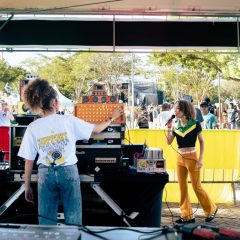
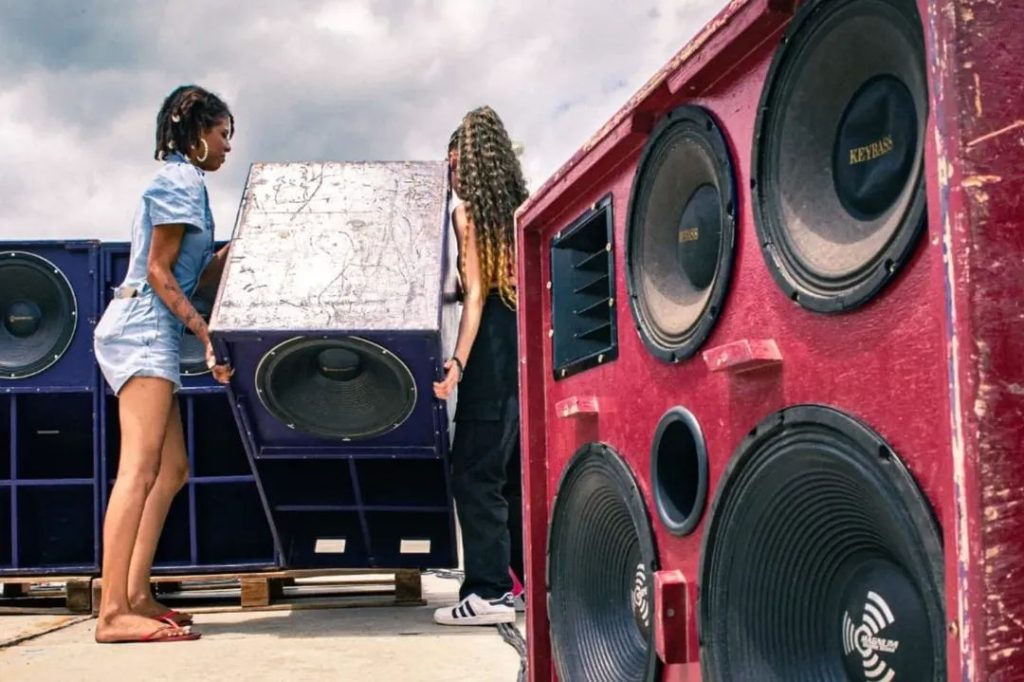
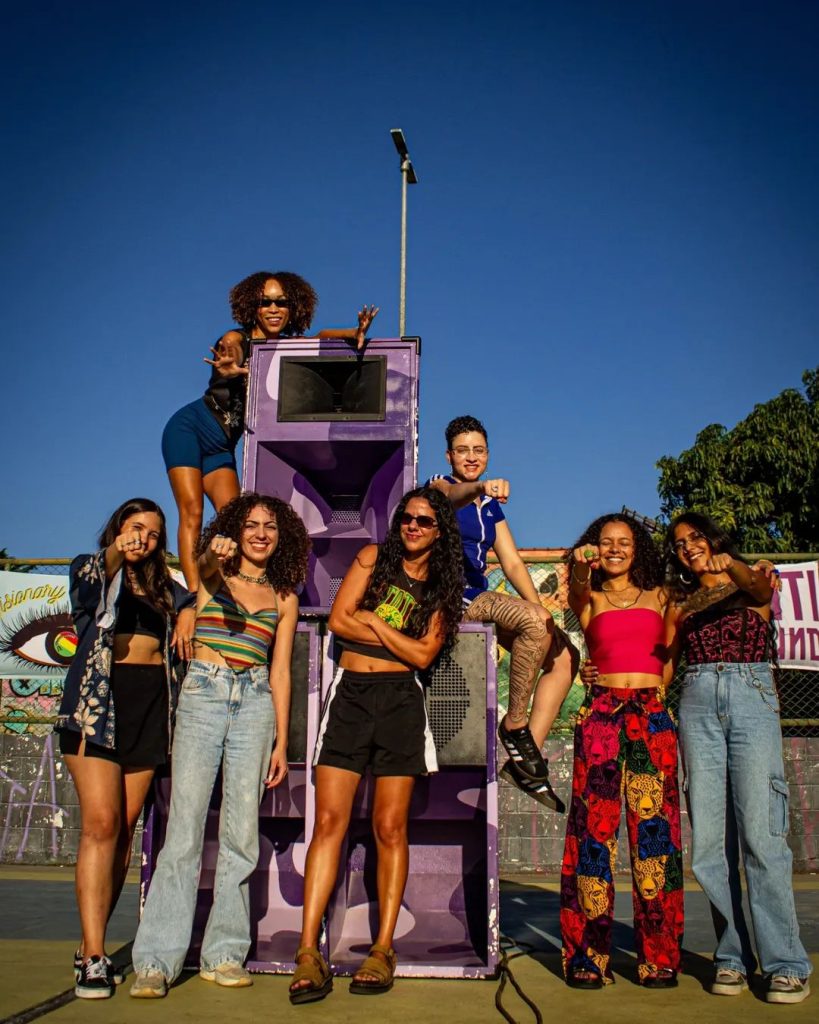
In addition to its strong political and social engagement, the movement in São Paulo has also been marked by an important internal evolution: the significant growth of female participation. Women are breaking historical barriers by taking on leadership roles in both technical and artistic positions. Here, women are taking full control of the production of events and cultural projects from start to finish. We are getting our hands dirty organizing open-to-thepublic sessions, carrying and setting up speaker boxes, seeking true independence within the sound system movement. Together, we are empowering ourselves and building indestructible bridges.
Even in the face of chronic structural challenges, such as the lack of financial support for independent initiatives and the barriers imposed on the occupation of public spaces, the Sound System movement in São Paulo continues to expand. The movement remains resilient through the organization of collaborative networks, connecting the tradition of its roots with urban innovation, while maintaining a strong focus on popular education and social justice.
 Do you feel that a new generation is changing the culture – especially women, queer artists and Black collectives?
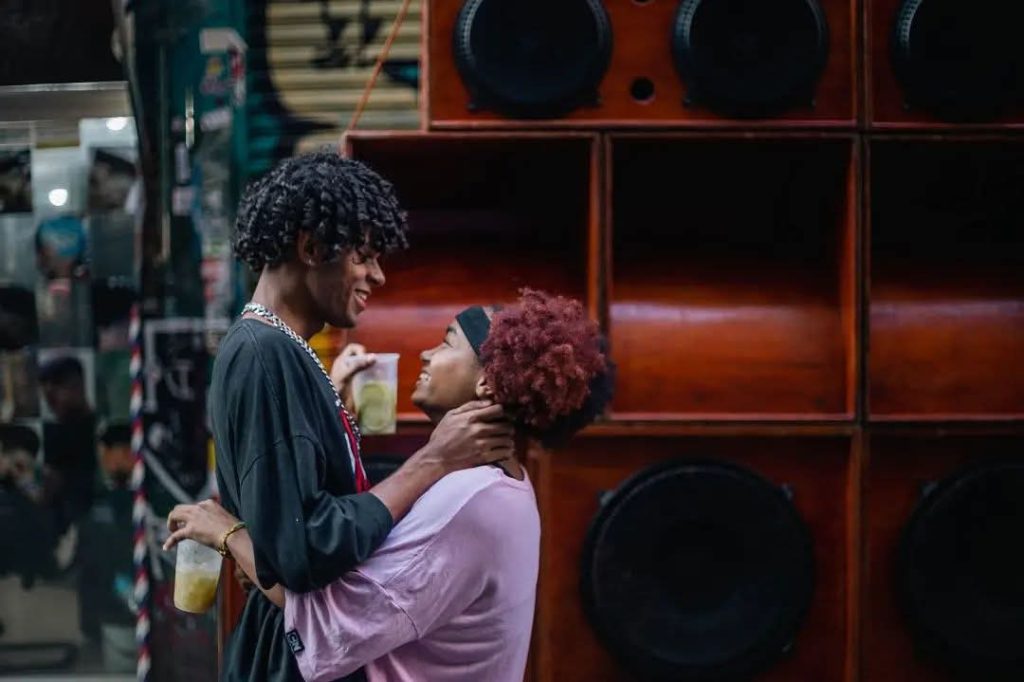
JANAH: Yes, and in a very profound way. Over the years, each generation has appropriated the existing structure and reinvented its forms of expression according to its own reality. These generations have redefined spaces, created new possibilities and expanded the paths of participation within the culture. Today, the new generation continues this process, expanding and reinventing the ways in which the movement is propagated and strengthened according to each lived reality.
Some of these changes are already quite visible. A space that was once almost entirely dominated by men now includes more and more women getting involved and taking leading roles in the production of events and projects from start to finish.
Likewise, we are witnessing an increasing presence of queer artists occupying microphones, curating musical selections and taking on positions of leadership and visibility. Collectives continue to grow stronger, deepening their knowledge of the culture and its ancestry, while also promoting dynamic and necessary discussions on topics such as urban politics, social rights, identity, territory and inclusion.
Sound System culture has always been a social technology created by people who existed on the margins of centers of power. In every territory, this culture has been adapted to local realities, creating new forms of organization, resistance and propagation. Therefore, when women, trans people and peripheral collectives occupy Sound System culture today, they are not diverting it from its essence. On the contrary, in many ways, they are reconnecting the movement to its original vocation, based on autonomy, survival, invention, the occupation of public spaces, community building and resistance.
History continues to be a central element of this culture, but it now also carries other experiences of body, gender, territory and identity. Each generation that occupies the Sound System not only redefines the sound of the sessions, but also the ways of existing, coexisting, and imagining freedom through frequencies, contributing to the construction of new possible futures for society.
What makes the Brazilian Sound System movement different from Europe or Jamaica?
JAHNAH: The Sound System culture arrived in Brazil with direct influence from Jamaica and the British scene, but it ultimately transformed as it came into contact with our local customs, rhythms and realities. Instead of just reproducing the original Jamaican model, the sound system gradually merged with Brazilian urban and peripheral cultures, gaining new forms of expression here.
In Brazil, Jamaican culture found fertile ground, especially in Maranhão and São Paulo. Starting in the 1970s, the cultural movement connected Jamaica, Africa and Brazil, gaining its own identity through Maranhão’s radiolas (large sound systems dedicated to reggae), which further helped transform São Luís into the well-known “Brazilian Jamaica.” Reggae became embedded in the local popular identity and soon spread to other Brazilian states. In São Paulo, the sound system movement is also very strong, with many crews working underground in the streets to strengthen the culture.
In Brazil, reggae also mixed with other peripheral languages such as rap, funk and even elements of traditional rhythms, like maracatu and Afro-Brazilian music. This blend made the culture more plural and connected to our local identities. Here, it became a hybrid, creative movement deeply connected to social issues. Thus, the Brazilian sound system maintains the original essence of community, resistance and sonic power, while simultaneously building its own identity within global musical culture.
Many people in Europe still associate reggae culture with male dominance. Do you think the culture is finally changing?
JANAH: Yes, slowly, but in a very visible way. Sound System culture still carries many traces of a historically male-dominated environment. For a long time, it was associated almost exclusively with the world of men. From the major figures who shaped the history of the movement, men have always occupied most of the prominent positions within the culture.
However, this reality has been gradually changing, especially in recent years. More and more women are gaining positions of leadership within the culture, not only as singers, but also as DJs, selectors, music producers, sound technicians, operators and leaders of cultural collectives. This growing female presence increasingly demonstrates that the culture is becoming more diverse, plural and open to new voices, experiences and perspectives.
Despite these advances, important challenges still remain. In many traditional spaces, sexism continues to exist, particularly in technical areas and leadership positions. Many women still have to constantly prove their abilities in order to earn the same recognition that is often granted to men more naturally.
Even so, the transformation is evident. Reggae is experiencing a very important moment in its process of cultural renewal. Today, we have more women occupying leadership positions and our presence can no longer be seen as an exception or a curiosity within the culture. We are now part of the very structure that sustains, strengthens and transforms the global Sound System scene.
We are not simply occupying spaces. We are helping to redefine the present and build the future of Sound System culture around the world.
 How political is your work? Can music and dance really create social change?
JANAH: The work of Visionary Women is political precisely because it is rooted in the occupation of spaces where women, especially within Sound System culture, have historically had little visibility. More than just entertainment, Visionary uses music, dance and art as tools for expression, resistance and female empowerment.
When women come together to create Sound System events, dance, produce art and, above all, build support networks, they help break down sexist norms and inspire other women to occupy these spaces with greater confidence and autonomy.
Music and dance may not change the world on their own, but they possess an enormous power to raise awareness, connect people and create a sense of belonging. Reggae has always carried messages of resistance, equality and freedom – and these values remain deeply present in the activities I develop through Visionary. There is a continuous process of building community, belonging and cultural identity. When I organize events, performances and cultural gatherings, I also create safe spaces for exchange, learning, support and representation for other women from the outskirts and the underground scene.
For this reason, my work is political not in a partisan sense, but in a social and cultural one: giving voice, creating opportunities, strengthening connections and showing, that women also belong at the center of culture and are fully capable of occupying any position within the movement.
Social media helped many underground collectives become globally visible. Has Instagram changed your movement?
JANAH: Instagram is not just a showcase, but also a tool for organizing, communicating and expanding our own movement. In the past, many independent collectives depended almost exclusively on physical presence to promote their actions: printed flyers, word-of-mouth promotion, local events and direct connections within Guarulhos. This significantly limited the reach of these initiatives.
With Instagram and the support of other social networks, this scenario has changed. We gained visibility beyond our territory, reaching people from other cities, states, countries and different cultural scenes. This expansion directly influences the emergence of new opportunities, such as partnerships, event invitations, cultural exchanges and artistic collaborations that would previously have been much harder to achieve.
For Visionary Women, Instagram works as a true digital resonance box. What happens in face-to-face gatherings echoes in the online environment. And what is born on social networks can return to the territory in the form of new connections, new audiences, new learnings and new possibilities for action.
In the end, the change was not only about visibility, but also about scale and reach. Visionary’s work remains deeply rooted in its local reality, but today it engages with a much broader network. This shows how technology can strengthen and expand cultural movements without them losing their essence. Visionary remains connected to Guarulhos and to the realities of Brazilian peripheries, but it can now cross geographical and symbolic borders, building bridges with people and initiatives in different parts of the world, regardless of distance.
At the same time, this digital growth does not replace what happens in person. The strength of the movement still lies in the gatherings, sessions, performances, dancing, occupation of public spaces and community building. Social networks act as tools of amplification, but they do not replace the collective experience lived in the streets and territories. Instagram did not create the movement, but it helped expand it, strengthen it and amplify its voice.
 What are the biggest challenges for independent female collectives in Brazil today?
JANAH: Feminist independent collectives in Brazil face a set of challenges that intersect cultural, economic and structural dimensions. One of the main ongoing challenges is structural sexism. Even in cultural spaces considered progressive, women often have to prove more competence in order to be taken seriously, especially in technical roles. In addition, there is still resistance to recognizing women as leaders in the scene and not only as “participants.” My work with Visionary Women emerges precisely to challenge this reality, not only by occupying space as an artist, but also by occupying the space of female protagonism within the culture. Safety is also a central issue. Both at events and during travel to them, especially at night in peripheral areas, there are constant concerns about violence, harassment and the lack of adequate infrastructure for women. In addition, there is the challenge of the double workload and motherhood. Many women must balance collective work with formal jobs, studies and family responsibilities, which limits the time and energy available for the continuous development of their projects.
The lack of funding and institutional support is also a major challenge, not only for women’s collectives but for many independent groups. In most cases, we depend on self-management and collaboration among members to make cultural events and actions possible. Public funding programs do exist, but they are still highly competitive, bureaucratic and not always accessible to small or peripheral groups. Visionary Women operates not only within music, but also within a shift in mindset. This means facing resistance, discomfort and constant processes of adaptation within a scene that is still in transformation.
What kind of future do you dream about for Sound System culture?
JANAH: I imagine a future in which Sound System culture continues to grow without losing its scale, originality and roots. It would be beautiful to see a more distributed culture: with more women in technical roles, more trans and queer people leading collectives, more children learning sound engineering, more peripheral producers living from their own art – without the pressure of turning everything only into a “cultural product” for brands or elitist festivals.
Perhaps the greatest challenge of the future is precisely this: growing without losing autonomy and gaining visibility without being domesticated. The ideal scenario would be a future in which Sound System continues to be a space of invention and collective innovation, where music, care, technology and resistance coexist. And, perhaps most importantly, that future generations still feel, in front of a wall of bass, that inexplicable ancestral sensation that no one is alone there. That each new collective can build its own sound system more easily. That gatherings continue to happen in the streets, in the peripheries, in warehouses and in public squares. And that bass continues to be a common language of unity among very different people.
And that, even when the culture crosses borders, festivals, and digital platforms, it does not lose the memory of where it came from. In the end, the dream is that Sound System continues to exist as this: a way of saying, together, that the world can be reorganized through sound, body and shared presence.
What does “safe space” really mean in practice at your sessions?
JANAH: “Safe space” is not an abstract idea – it appears in very concrete decisions that shape how the session unfolds from beginning to end. In practice, this means several objective actions within my sessions: Active control of our environment: the space is not left to “just happen on its own.” There is a clear posture of mediation. We maintain direct communication with the audience about respect and boundaries – and our team is always attentive to the dancefloor, not just the sound.
Low tolerance for sexism and harassment: in our events, persistent and invasive flirting is not normalized. Physical contact without consent is treated as a violation of the space – and the continuation of the party also depends on the audience’s behavior. Women in technical command: women on the mixer, on the microphone and in music selection. This creates a visible reference of female authority on stage, breaking the idea that technical work is a “male territory.” This changes the dynamics of the dancefloor because it redefines who has legitimacy there. The safe space is also behavioral: respect for other people’s bodies as a basic rule of dancing and freedom to dance without being approached or interrupted. Beyond the party itself, there is an environment of care in Visionary sessions: welcoming those who feel uncomfortable, strengthening bonds between women (DJs, MCs and the audience) and building a sense of belonging in a scene that has historically been exclusionary. In practice, “safe space” in this context is not just about avoiding risks – it is about transforming the logic of the party. Instead of a dancefloor where aggressive behavior can be tolerated, we create an environment where respect is not optional, female presence is not an exception and sound also organizes an ethic of coexistence.
 Which women or collectives from Brazil should the world pay attention to right now?
JANAH: There are so many talented sisters active in Sound System culture that it becomes difficult to list them all. But starting with activists from Brazil – and if you don’t know them, it is really worth searching for the work of these sisters: Selecta Tutti, Rude Mamma, Aqualtune, Dani Pimenta, Layla Arruda, Lovesteady, Ana Caru, Marina Teggi, Selecta Anna, Jah Queens Sounds, DJ Anayá, DJ Jazz, Coletivo das Pussy, Manu Star, DJ Doren, Vládia Soares, Célia Sampaio, Núbia, Maria Peralta, Sistah Chilli, Sistah Mari, Mya Akoma, Anna Kelli, Princesa Vandal, Mamuska Sound and Women of Zion, among others. Brazil is becoming a fertile ground, where women continue to get their hands on the work and establish their voice and representation within Sound System culture. Expanding this network even further, we go to Thailand, where we have our sister Sista Zine. In Europe, we find Sasha Steppa and Sanga Mamma Africa. In Mexico and Chile, we have Musefeminas, Kebra Wadada and Jah Chata, among others. Beyond those mentioned, there are many other rising women in Sound System culture who continue to stand up all over the world. It is very worthwhile to deepen this research and get to know other sisters who also build and strengthen this culture globally. A big salute to the presence and leadership of women across the entire structure of Sound System culture.
Do you see yourselves as part of a global feminist Sound System movement?
JANAH: Visionary Women can be understood as part of a global feminist Sound System movement, yes – but not in the sense of belonging to an “official network” or an organized international structure. I position myself as part of a transnational cultural resistance that also emerges in different states and countries independently, but with very similar principles. Visionary is a feminist movement in practice, because its work reorganizes power relations within Sound System culture, placing women at the center of creation, technical work and artistic leadership in a historically male-dominated space. At the same time, there is no need to rely on the label “feminist” as a formal identity for this to be true. The feminist character appears less as a slogan and more as a concrete effect of the practice: occupation of spaces, autonomy, visibility and the building of networks among women in the scene. We can indeed be understood as a feminist movement, especially through the positioning and cultural practices I assume within the Sound System scene. I do not necessarily present myself as a “feminist political collective” in the classic institutional sense, but I operate in alignment with feminist principles in practice, such as: female protagonism in music, culture and Sound System operation, the creation of female space within a historically maledominated scene and the strengthening of support networks among women (sisterhood in cultural practice). In this sense, it is possible to understand, that my work as Visionary Women is clearly part of a global feminist Sound System movement and not just an isolated collective in São Paulo.
Interview: Christian Bautze-Boeke (6/2026)